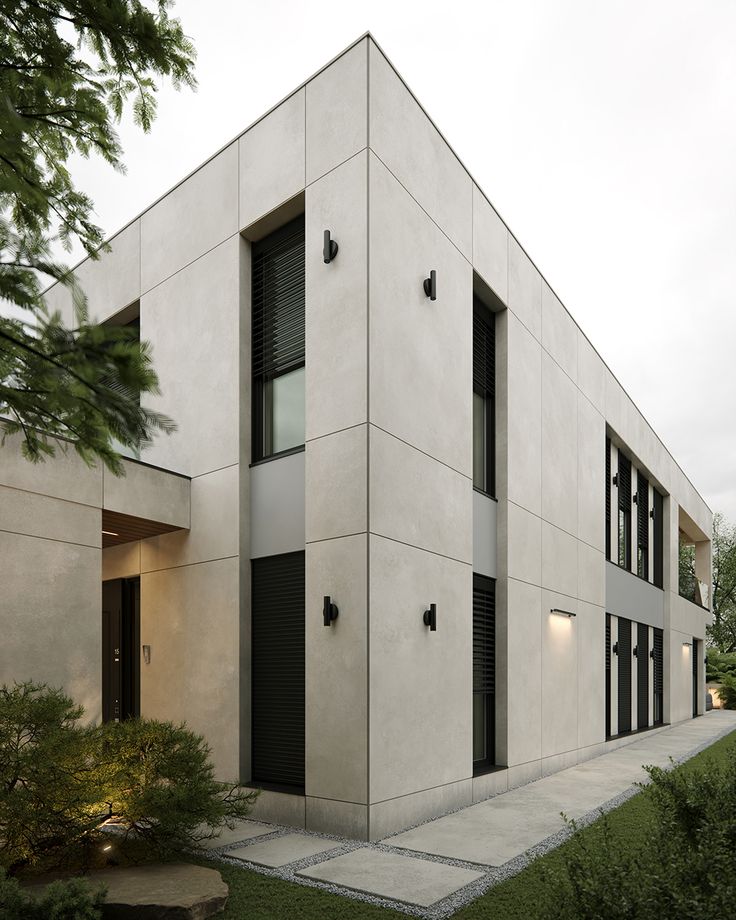
Microcement Facade
Definition and Application
- A new and very thin coating that creates a concrete and modern look.
- Composition of cement, water-based resin, additives and pigments.
- Use in exterior and interior facades, floors, walls, bathrooms and kitchens.
Application process
- Surface preparation: clean, dry, free of dust and cracks.
- Base layer: Create a solid base using glass mesh to prevent cracking.
- Layer Middle: Multiple layers for surface integrity and smoothness.
- Top layer: Determines the final appearance and desired texture.
- Sealer and varnish: Protects against water, UV, scratches, and determines the final gloss (matte, semi-matte, glossy).
Features and benefits
- Integrated and seamless appearance, minimal and modern
- Variety of colors and textures
- Can be applied to concrete, cement, tile, ceramic, plaster, metal, wood and old surfaces
- High resistance to abrasion, water, impact and temperature changes
- High flexibility compared to traditional concrete
- UV protection with final layers
- Quick and easy installation with weight Low
- Antibacterial and antifungal properties
Applications
- Exterior facade of residential, villa, apartment, commercial and office buildings
- Covering walls, columns and architectural elements
- Renovation and renovation of old facades
- Covering around windows and doors
Considerations
- Requires a skilled and specialized contractor for final quality
- Higher cost than cement coating or traditional paint
- Maintenance: Cleaning with mild materials and periodic inspection of the protective layer
- Sensitivity to concentrated strong impact
Hasco Holding Microcement, a combination of modern aesthetics, high durability and versatility for unique and integrated facades.


