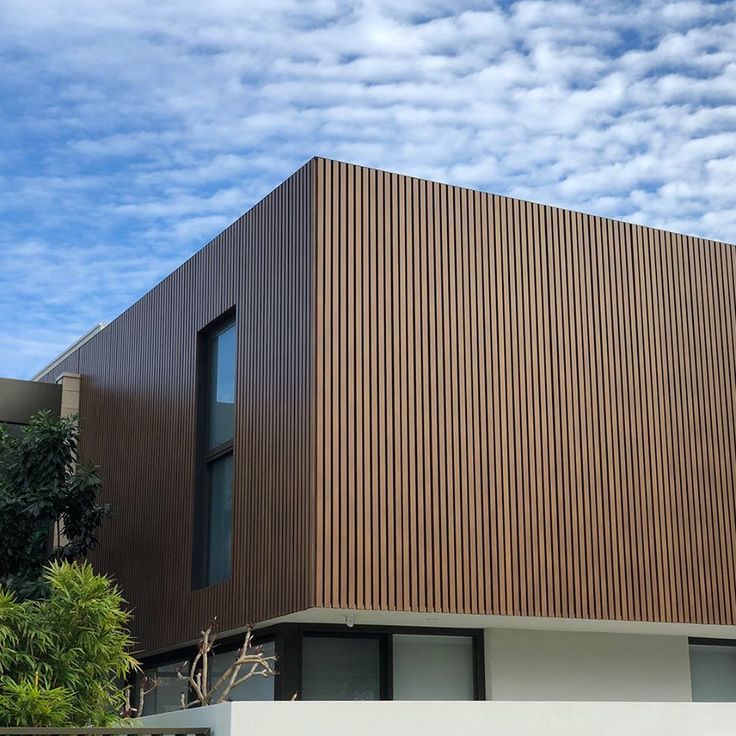
Thermo Wood Facade
Definition and Process
- Wood is subjected to high temperatures (180-240°C) in an oxygen-free environment.
- Reduction of moisture and higher dimensional stability
- Increase in resistance to decay, fungus and insects
- Change in wood color to light to dark brown shades
Features
- High dimensional stability and reduced warping
- Resistance to decay, fungus and pests
- Natural and warm beauty of wood
- Lightweight and easy to carry and install
- Proper thermal and acoustic insulation
- Environmentally friendly and free of harmful chemicals
- Variety of dimensions and profiles
- Relative resistance to UV rays (can be reinforced with oil or protective varnish)
Installation method
- Implementation of metal or wooden substructure with appropriate distance for ventilation
- Installation of vertical or horizontal Thermowood profiles with stainless screws
- Using clip or hidden screw systems for integrated connection
- Standard sealing between profiles for expansion and ventilation
- Implementation of UV protective coating and paint (optional and periodic)
Advantages
- Beauty and natural appearance of wood
- High resistance to moisture, rot and pests
- Dimensional stability and non-warping
- Environmentally friendly
- Good thermal and acoustic insulation
- Lightweight and easy to install
- Better fire resistance than regular wood
Disadvantages
- Higher initial cost than regular wood or other facade materials
- Requires periodic maintenance to maintain the original color
- Sensitivity to severe impact and dents
Applications
- Exterior facades: villas, residential houses, commercial and office buildings
- Interior wall and ceiling cladding in modern design
- Pergolas, pergolas and outdoor spaces
- Outdoor flooring
Hasco Holding’s Thermowood facade, a combination of the natural beauty of wood and high resistance to environmental factors, is an ideal option for creating modern and sustainable facades.


